For more than 900 years, the Diocese of Down & Connor has been a living witness to Catholic faith in the north-east of Ireland — from the earliest days of St Patrick's mission to the vibrant parish communities of today.
The Diocese of Down & Connor is one of the largest Catholic dioceses in Ireland, covering the whole of County Antrim and most of County Down in Northern Ireland. It is home to the city of Belfast — the largest city on the island of Ireland outside Dublin — as well as thriving towns and rural communities stretching from the Glens of Antrim to the shores of Strangford Lough.
The diocese takes its name from two ancient sees: Down, centred on Downpatrick where St Patrick is traditionally buried, and Connor, where St MacNissi founded a great monastery in the sixth century. These two sees were formally united in 1441 and have remained joined ever since.
Ecclesiastically, Down & Connor belongs to the Province of Armagh, under the metropolitan authority of the Archbishop of Armagh and Primate of All Ireland. It is governed by a bishop assisted by Vicars General, the College of Consultors, and the Diocesan Pastoral Council.
Lisbreen, 73 Somerton Road
Belfast BT15 4DE
Telephone: 028 9077 6185
Charity No.: 103983
Contact UsSt Peter's Cathedral, Belfast, has served as the mother church of the diocese since 1986. Consecrated in 1866, it stands on the Falls Road as a testament to the faith of Belfast's Catholic community.
Visit Cathedral PageThe Diocese of Down & Connor is placed under the patronage of two great saints of the early Irish Church, whose lives continue to inspire the faithful of this diocese.
Feast Day: 3 November
St Malachy (Máel Máedoc Ua Morgair, c. 1094–1148) was born in Armagh and became one of the greatest reformers of the Irish Church. Appointed Bishop of Connor in 1124, he set about restoring discipline and reviving religious practice in a diocese that had suffered greatly from Norse raids and internal conflict.
Malachy later became Archbishop of Armagh, but resigned the see in favour of the contemplative life. He journeyed twice to Rome and became a close friend of St Bernard of Clairvaux, who wrote his biography. He introduced the Cistercian and Augustinian orders to Ireland and died in Bernard's arms at Clairvaux on 2 November 1148. He was canonised by Pope Clement III in 1190 — the first formal papal canonisation of an Irish saint.
Feast Day: 4 September
St MacNissi (Aengus mac Nissi, d. c. 514) is regarded as the founder and first bishop of the ancient see of Connor. According to tradition, he was baptised by St Patrick himself and was later educated under St Olcan of Armagh. He established a great monastery at Connor (near modern-day Ballymena) that became a renowned centre of learning and prayer in early Christian Ireland.
MacNissi's monastery attracted scholars and monks from across Ireland and beyond. The see of Connor, which he founded, remained one of the most important in the north of Ireland for centuries. His legacy lives on in the very name of the diocese and in the faith of the communities he first evangelised in County Antrim over 1,500 years ago.
From the arrival of St Patrick to the present day, the story of Down & Connor is woven into the history of Ireland itself.
St Patrick arrives in Ireland, traditionally landing near Saul in County Down. He establishes the first church in Ireland at Saul and begins his great mission of evangelisation. According to tradition, he baptises converts across the territory that will later become the Diocese of Down & Connor, including the young Aengus mac Nissi — the future St MacNissi.
St Patrick dies and is traditionally buried at Downpatrick, in the shadow of the great hill of Dun Lethglaise. His burial place becomes one of the most venerated sites in Ireland. The association of Down with St Patrick lays the spiritual foundation for the future diocese.
St MacNissi, said to have been baptised by Patrick himself, establishes a monastery and episcopal see at Connor near modern-day Ballymena. It becomes one of the great centres of learning and prayer in early Christian Ireland, and the name "Connor" will endure in the title of the diocese for more than a millennium.
The monasteries of Down and Connor flourish during Ireland's golden age of saints and scholars. The region produces numerous holy men and women, and its monastic schools attract students from across Europe. The great monastic settlement at Bangor (Bangor Abbey, founded c. 558 by St Comgall) becomes one of the most important in all of Christendom.
Viking incursions bring devastation to the monasteries of the region. Bangor is raided repeatedly, and the monastic settlement at Connor suffers greatly. The organised church in the region enters a period of decline, though faith among the people endures.
The landmark Synod of Rathbreasail, presided over by the papal legate Gilbert of Limerick, formally establishes a diocesan structure for the Irish Church. The Diocese of Connor is officially constituted as one of the territorial dioceses of Ireland, replacing the older, loosely-defined monastic jurisdictions. This is the founding moment of the diocese as it is known today.
The great reformer Malachy (Máel Máedoc Ua Morgair) is appointed Bishop of Connor. He finds a diocese ravaged by war and neglect and sets about a programme of vigorous renewal — restoring churches, re-establishing religious discipline, and reviving the sacramental life of the people. His reforming energy transforms the diocese and earns him a place among the greatest figures of the medieval Irish Church.
St Malachy dies at the Cistercian abbey of Clairvaux in France, in the arms of his dear friend St Bernard. Bernard writes his biography, spreading Malachy's fame across Europe. In 1190, Pope Clement III canonises Malachy — the first Irish saint to receive a formal papal canonisation.
John de Courcy invades eastern Ulster, seizing Downpatrick and establishing Anglo-Norman control over much of Counties Down and Antrim. The invasion profoundly disrupts the existing church structures. De Courcy founds new monasteries and brings in continental religious orders, but the displacement also causes lasting tensions between the Gaelic and Anglo-Norman clergy.
Under Anglo-Norman and later English influence, the dioceses of Down and Connor develop distinct identities while sharing overlapping clergy and communities. New parish churches are built, mendicant orders establish friaries, and the faith takes deeper root among both the Gaelic and settler populations.
Pope Eugene IV formally unites the two ancient sees of Down and Connor into a single diocese: "Down and Connor" (Dunensis et Connorensis). This union, driven by practical necessity in a region still recovering from the turmoil of the medieval period, creates the diocese in its present form. The bishop would henceforth bear the title of both sees.
The Protestant Reformation and subsequent Penal Laws bring centuries of persecution for the Catholic faithful of Down & Connor. Churches are confiscated, bishops are banished, and the Mass is driven underground. The faith survives through the courage of priests who celebrate the sacraments in secret at "Mass rocks" and in private homes across the countryside.
As the Penal Laws are gradually relaxed through the 18th century, the Catholic Church in Down & Connor begins a slow recovery. Modest chapels are built, and the diocese re-establishes a more visible presence. The faithful, who had endured generations of persecution, begin to worship openly once more.
The Roman Catholic Relief Act of 1829 grants civil rights to Catholics across the United Kingdom of Great Britain and Ireland. For the Diocese of Down & Connor, this marks the beginning of an era of renewal and expansion. New churches, schools, and institutions are founded at a rapid pace, particularly in the growing industrial city of Belfast.
The great church of St Peter's on Belfast's Falls Road is consecrated, designed by the renowned ecclesiastical architects Jeremiah McAuley and John O'Neill. Built in the decorated Gothic style, it stands as a powerful statement of Catholic confidence and devotion in the heart of industrial Belfast. The church serves the rapidly growing Catholic population of the city.
The magnificent twin spires of St Peter's are completed, soaring above the Belfast skyline and becoming one of the city's most recognisable landmarks. Designed by Fr Jeremiah McAuley, the spires rise to a height of approximately 175 feet and are visible from across the city, a beacon of faith in an era of great change.
The 20th century brings enormous change to the diocese. Two World Wars, the partition of Ireland in 1920, and the subsequent decades of civil conflict (the Troubles) test the faith and resilience of the Catholic community. Through it all, the parishes of Down & Connor serve as anchor points of community, hope, and reconciliation.
St Peter's Belfast is formally designated as the Cathedral Church of the Diocese of Down & Connor, becoming the seat of the bishop. This recognition honours the central role that St Peter's has played in the life of the diocese for more than a century and establishes it as the mother church for all 88 parishes.
The diocese embarks on a programme of pastoral renewal, responding to the changing needs of its communities in the wake of the peace process. New structures of collaboration between parishes are developed, leading eventually to the creation of the 15 Pastoral Communities that shape diocesan life today.
Most Rev. Alan McGuckian SJ is appointed Bishop of Down & Connor in February 2024, becoming the latest successor in an unbroken line of bishops stretching back to St MacNissi. A Jesuit and native of Belfast, Bishop McGuckian brings a deep commitment to evangelisation, education, and pastoral care as he leads the diocese into a new chapter of its long history.
The Diocese of Down & Connor is governed by its Bishop, assisted by Vicars General, the College of Consultors, and the Diocesan Pastoral Council.
Most Rev. Alan McGuckian SJ has served as Bishop of Down & Connor since February 2024. As the chief pastor, he has the fullness of the sacrament of Holy Orders and bears responsibility for the teaching, sanctifying, and governing of the diocese.
Meet the BishopThe Bishop is assisted by Vicars General who share in the governance of the diocese, and by the College of Consultors — a body of senior priests who advise the Bishop on matters of importance. Together, they ensure the smooth administration and pastoral care of the diocese.
The Diocesan Pastoral Council brings together clergy, religious, and laity to advise the Bishop on pastoral priorities. It serves as a forum for discerning the needs of the faithful and shaping the diocese's mission of evangelisation and service in the modern world.
In response to the changing landscape of parish life, the Diocese of Down & Connor has organised its 88 parishes into 15 Pastoral Communities. These groupings bring neighbouring parishes together to share resources, collaborate on ministry, and strengthen the bonds of community.
Each Pastoral Community is led by a coordinating team of clergy and laity who work together to plan liturgies, sacramental programmes, outreach initiatives, and faith formation. This collaborative model ensures that even as the number of active priests changes, every community continues to receive vibrant pastoral care.
The Pastoral Communities reflect the diocese's commitment to a "Church of communion and mission" — one in which every baptised person is called to play an active role in the life of faith. They are not replacements for parishes, but rather a framework within which parishes can support and enrich one another.
Explore Our ParishesThe Pastoral Communities span the full breadth of the diocese, from the urban parishes of Belfast to the rural communities of the Glens of Antrim and the Ards Peninsula. Each one is unique, shaped by its local history, geography, and people.
Through shared programmes of catechesis, youth ministry, social outreach, and liturgical life, the Pastoral Communities are building a diocese where the faith is lived, shared, and celebrated in new and creative ways.
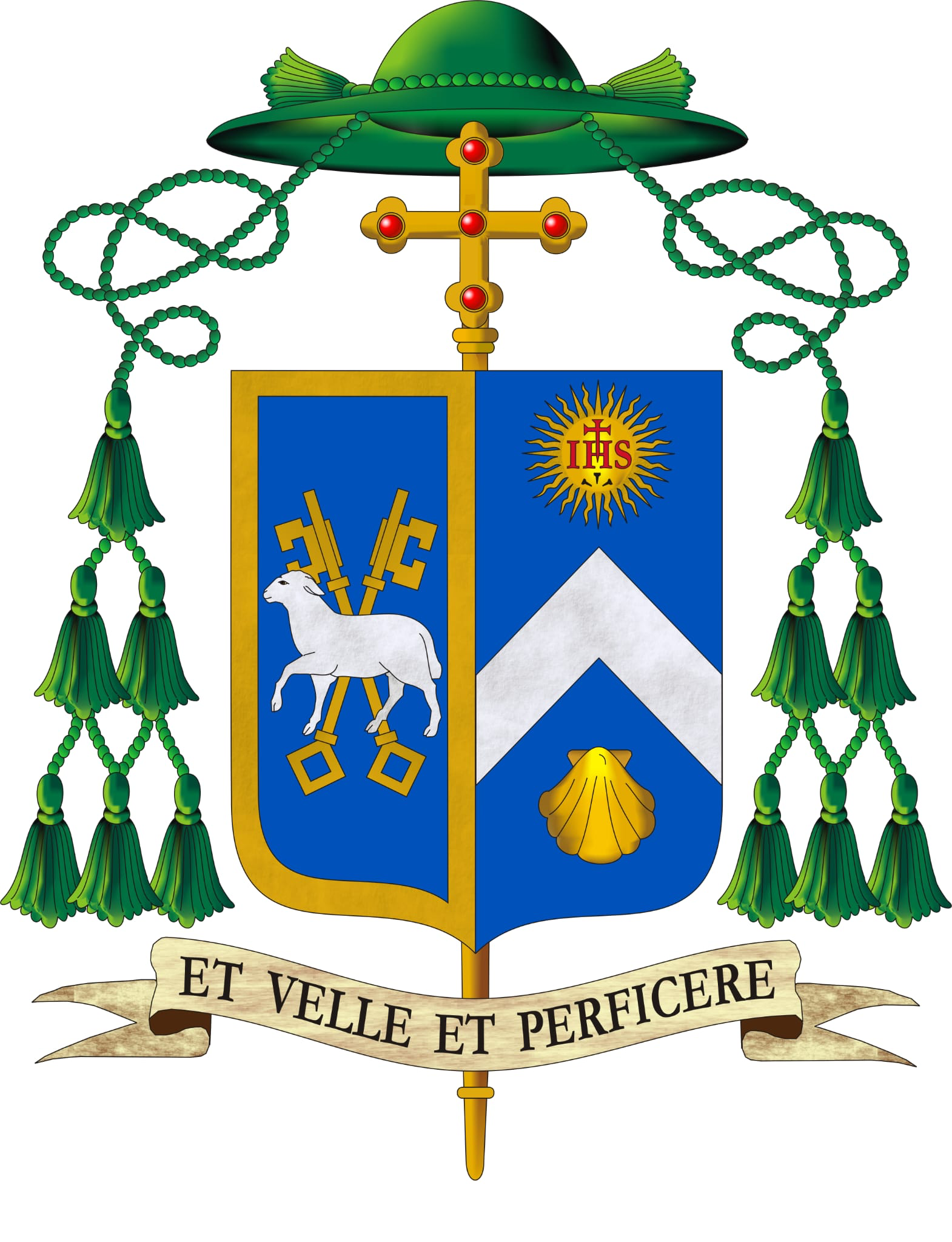
"Et velle et perficere" — "Both to will and to accomplish" (Philippians 2:13). This motto, drawn from St Paul's letter to the Philippians, expresses the diocese's trust that God gives both the desire and the power to do His will.